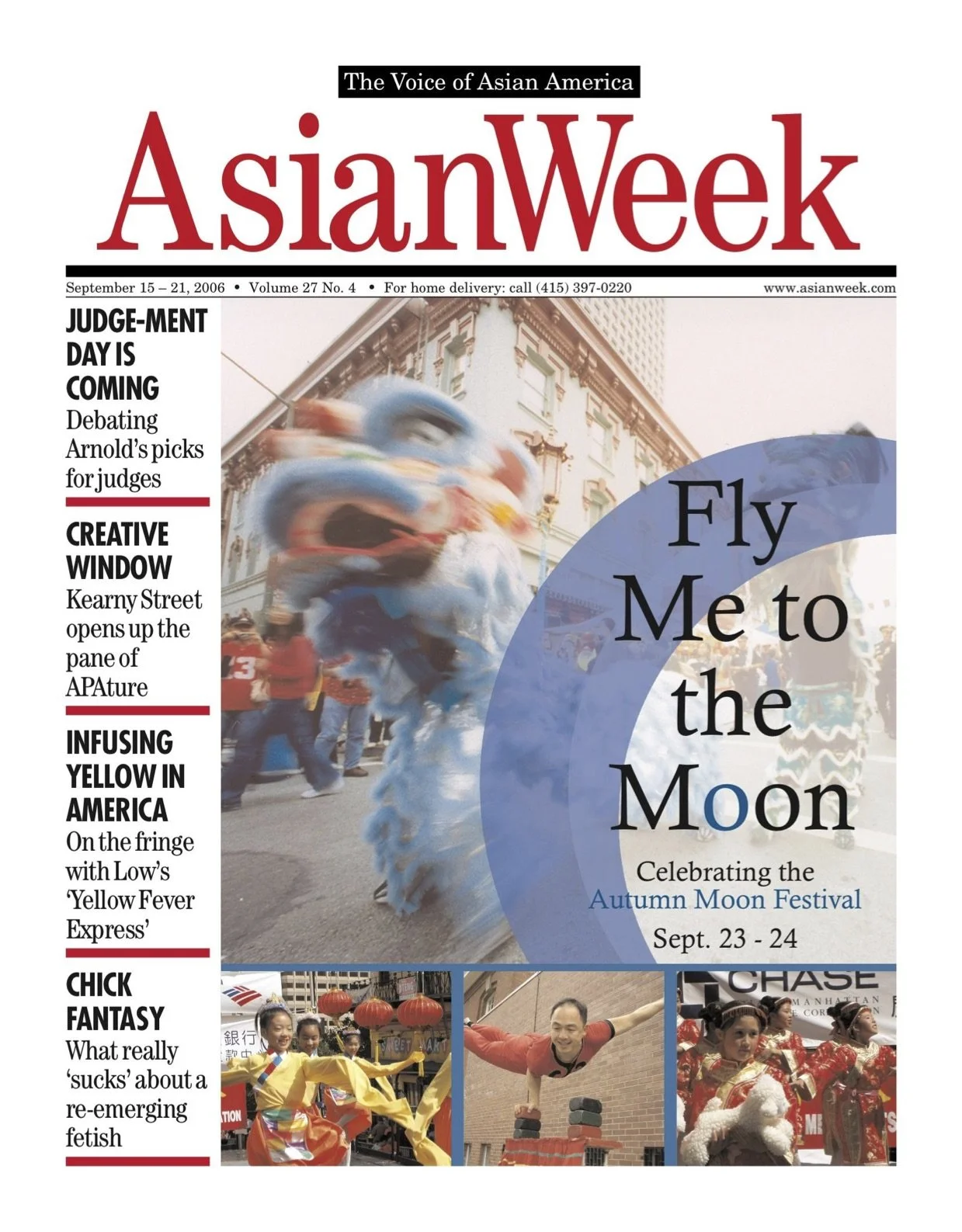
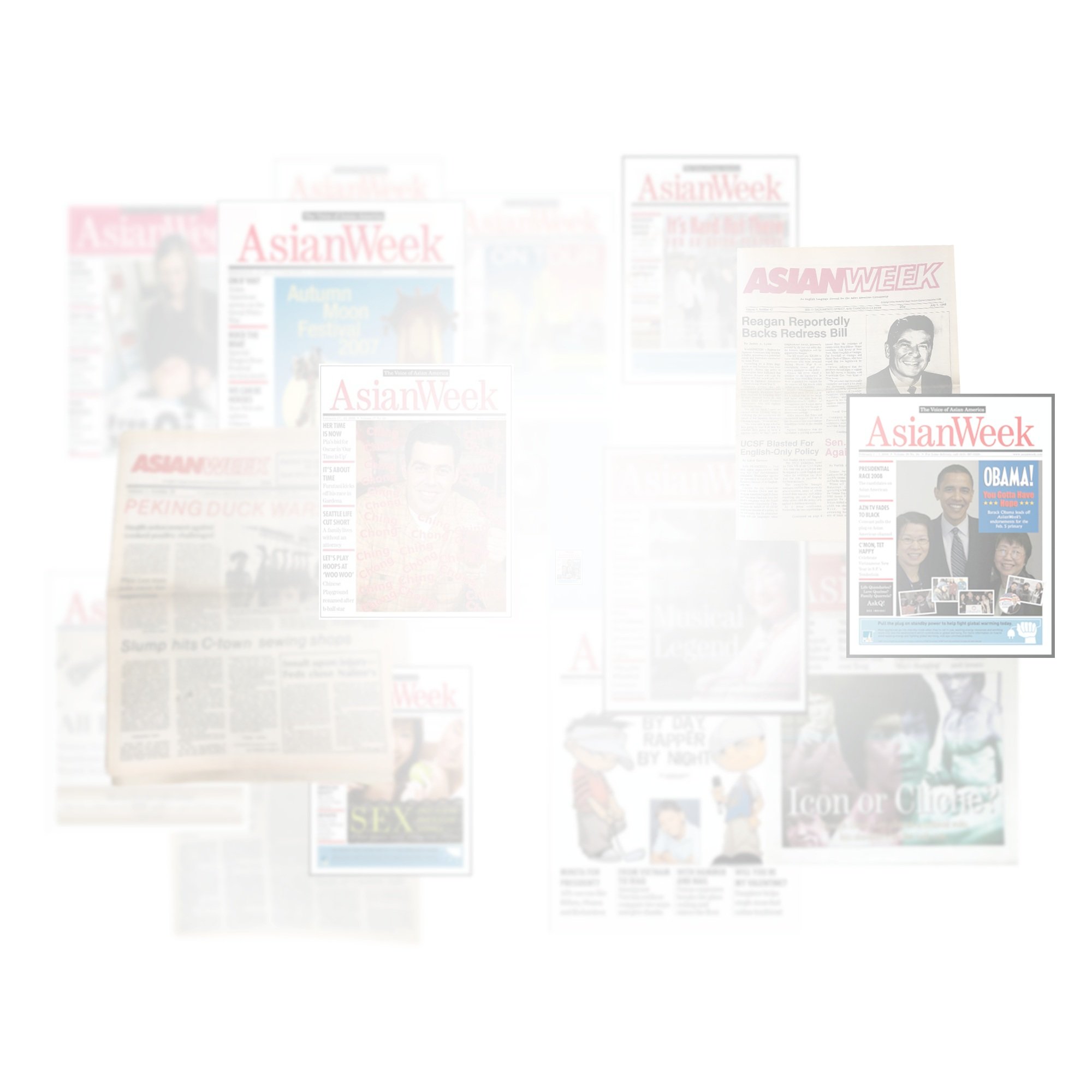
For over 30 years, AsianWeek proudly chronicled the growth and development of Asian Pacific America within American history. Today, the AsianWeek Database Project is bringing back three decades of news, education, and entertainment surrounding the Asian American community from the historical pages of AsianWeek’s newspaper and website. This database will feature simple search and display functions so that anyone will be able to readily and easily access this trove of information—to research, to reference, or to simply remember these important times in our community. This preview website shares some of the people and events documented in the AsianWeek Database Project. It also outlines some of the ways you can help, from sharing back issues to providing financial support that will go toward the development of this premier A.I. technology. Thank you! Please stay in touch with your contact info. More news to come!
Asian Pacific
America:
1965 - 2020
1965
The 1965 Immigration Act opens door for Asians to America. More than 95% of the 22.6 million Asian in America (as of 2020) arrived after or were born in America after 1965.
Source: Wikicommons
1968
The Asian American Movement begins at University of California, Berkeley, to unite under one identity in the United States.
1974
March Fong Eu elected Secretary of State of California, becoming the first Asian American woman ever elected to a state constitutional office in the United States. Earlier in 1966, Eu had been elected to the California State Assembly becoming the first Asian woman elected to a state legislature in the U.S. In 2019, the California Secretary of State/State Archives Building Complex was officially renamed the March Fong Eu Secretary of State Building, becoming the first California state office building named after an Asian American woman.
1978
Known as the “Vietnamese boat people,” an estimated 2 million Vietnamese refugees flee after the Vietnam War. Eventually more than 500,000 Vietnamese people resettle in America.
Source: The Independent
1979
John Fang establishes AsianWeek, the first and largest English news organization for Asian Americans, based in San Francisco.
Source: Fang Family Archives
1980
AsianWeek declares the 1980s "The Decade of the Asian," as U.S. Census breaks down Asian category by race for the first time, and Asian Americans become fastest-growing ethnic group in America.
Source: History.com (Bettmann/Getty Images)
1981
The winning design for the Vietnam Veterans Memorial in Washington, D.C., is awarded to 21-year-old Yale architecture student Maya Lin.
1982
In June, Vincent Chin, a Chinese American draftsman, is beaten to death by two white men after being mistaken for Japanese, near Detroit, Michigan. Chin's killers are sentenced to three years' probation and a fine of $3,000 plus fees.
Source: WSHU Public Radio
1985
In January, Ellison Onizuka becomes the first Asian American to fly in space, aboard Space Shuttle Discovery, during the United States' first space shuttle mission. In January 1986, Onizuka is one of nine astronauts killed onboard the Space Shuttle Challenger when it explodes shortly after liftoff.
Source: Wikicommons
1988
President Ronald Reagan signs the Civil Liberties Act of 1988. The federal law apologizes for Japanese American internment during World War II and provides reparations of $20,000 each to 82,219 survivors and descendants.
Source: Wikicommons
1989
Michael Chang, 17, becomes the first Asian American and youngest male to win a tennis Grand Slam event, the French Open.
Source: Bleacher Report
1990
George H.W. Bush signs a bill to extend Pacific/Asian American Heritage Week in May to become Asian Pacific American Heritage Month. In 1992, the month of May is officially designated Asian American and Pacific Islander Heritage Month.
Source: Eventcombo
1992
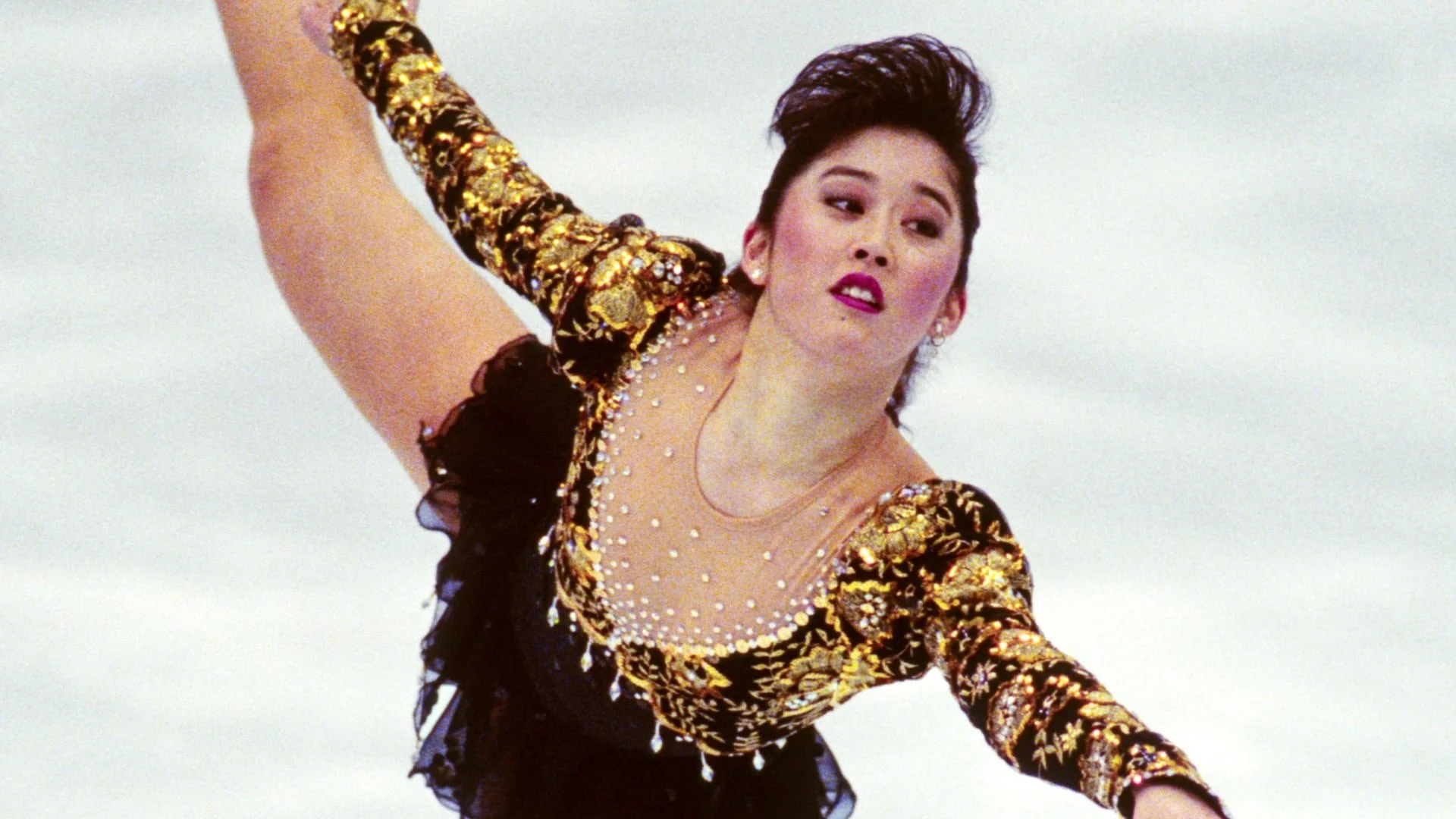
Kristi Yamaguchi wins her second World Championship title in women's figure skating and becomes the first Asian American to win an Olympic gold medal, at the Winter Olympic Games in Albertville, France.
Source: BuzzFeed
1992
Sa-I-Gu, or 4.29 (April 29th) in Korean, marks the start of the Los Angeles riots, after the Rodney King verdict acquits L.A. police officers. South Central Los Angeles Koreatown is damaged heavily, with Korean Americans left to defend their businesses themselves after receiving very little support from local authorities.
Source: Wikimedia via SOFREP.com
Source: Hyungwon Kang
1996
Taiwanese American scientist Dr. David Ho is named TIME Magazine's Person of the Year for his HIV/AIDS research.
Source: Time magazine
2000
President Bill Clinton signs the U.S.–China Relations Act of 2000, granting China permanent normal trade relations with the United States. Between 1980 and 2004, U.S.-China trade rises from $5 billion to $231 billion. In 2006, China surpasses Mexico as the United States’ second-biggest trade partner, after Canada.
Source: San Francisco Examiner
2001
Betty Ann Ong is a flight attendant aboard American Airlines Flight 11, the first airplane hijacked during the September 11 attacks. She relays vital information about the hijacking, which leads to the unprecedented order to close the U.S. airspace for the first time in the country's history and the directing of 4,546 airplanes to land.
2003
UCLA-AsianWeek publishes the New Face of Asian Pacific America, an analysis of the 2000 U.S. Census.
Source: Reuters via the Daily Mail
2003-2011
Many Asian Americans played key roles during the Iraq War:
- Army Chief of Staff Eric Shinseki publicly clashes with Secretary of Defense Donald Rumsfeld on the planned number of troops needed. Shinseki is allegedly forced into retirement over his dissent.
- Marine Corporal Edward Chin drapes a U.S. flag over Saddam Hussein’s statue, marking the symbolic end of the Battle of Baghdad.
- Major General Antonio Taguba authors an internal United States Army report on the abuse of detainees held at Abu Ghraib prison in Iraq. In June 2008, Taguba accused the White House administration of committing war crimes and torture.
2011
In January, Edwin M. Lee is appointed first Asian American mayor of San Francisco, filling a temporary mayoral vacancy. Asian Americans are more than 35% of city's population and dominate city's top elected offices. San Francisco is dubbed "the capital of Asian America." Later that year, he runs for a full term election and wins.
Source: Bowdoin College
2013
Chinese people become the largest group of immigrants to America, surpassing Mexican immigration to U.S. for first time.
2015
More than 60 Asian American organizations sue Harvard for discriminatory admission policies. In 2019, the federal judge rules that the admission policies do not discriminate against Asian Americans.
Source: The New Yorker
Source: Atonibai.com
2020
The COVID-19 coronavirus arrives in the U.S., spreading anti-Asian racism as the virus is believed to have originated from China.
Source: CNS/Kevin Lamarque, Reuter
2020
In August, U.S. Senator Kamala Harris is selected by Democratic Presidential candidate Joe Biden as his running mate for Vice President. When Biden is later elected President in November, Harris, who is of East Indian and Jamaican descent, becomes the first female, first Asian American and first African American to hold this office
AsianWeek Writers over the Years
Charles Leong 1979 - 1984
Founding member and AsianWeek columnist. A pioneer in journalism and public relations for the Chinese American community. Charles also founded the Chinese Press and Chinese News.
Norman Ishimoto and Harriet Ishimoto 1985 - 1993
AsianWeek political columnists of “API Kinetics.” Norman is a principal of KI Associates, a multicultural-multilingual market research agency. Harriet worked in public service and is a former aide to Representative Nancy Pelosi.
Don Lau 1990 - 1994
Contributing writer and photographer covered both national and local politics and Asian American communities in California. He is also the former chair of the Asian Pacific American Vietnam Veterans group.
Irene Cualoping 1990 - 1995
Columnist and photojournalist for AsianWeek, her series “Chicago Connection” profiled Asian American professionals across many fields. She is also an attorney, a businesswoman, and the former executive director of the Illinois Human Rights Commission.
Carolyn Gan 1979 - 2009
Founding member and longtime journalist, Carolyn was the first social columnist at AsianWeek, covering local events, art, and history. It was her “goal and passion to shine the light on the accomplishments in our community.”
Sumi Haru 1985 - 1993
Film and television actress and columnist for AsianWeek. Sumi is the first and only woman of color to serve as interim president of the Screen Actors Guild and was a member of the SAG’s National Board. She died in October 2014 at age 75.
Maeley Tom 1990 - 2008
AsianWeek political columnist focused on the political impact on Asian American communities. She was the president of the California State Personnel Board and spent 20 years in the California State Legislature as the Chief Administrative Officer of the California Assembly and the Chief of Staff to the California State Senate President.
Arthur Hu 1990 - 2008
Columnist for AsianWeek whose series “Hu’s On First” provided different viewpoints on historical and political backgrounds of Asian American communities. He also wrote columns covering affirmative action and race relations.
Lim P. Lee 1981 - 1991
Founding advisor and later columnist for AsianWeek. In 1966, he was appointed San Francisco Postmaster, becoming the first Asian American postmaster in America and the highest ranking official of Asian descent in federal government. Previously, he worked as a social worker and juvenile probation officer. He died in June 2002 at age 91.
Gerrye Wong 1989 - 2009
AsianWeek columnist covering Chinese American culture, politics, and history. She is the co-founder of the Chinese Historical & Cultural Project and the Chi Am Circle Women’s Club and is a board member of Angel Island Immigration Station Foundation.
Sam Chu-Lin 1990 - 2006
Contributing writer for AsianWeek focusing on politics, history, and racial justice. Sam was one of the first Asian American reporters on network television and was known for his coverage of Asian American communities. He died in March 2006 at age 67.
Emil Guillermo 1993 - 2009
Print and broadcast journalist whose series, “Amok,” was considered one of the most widely read columns on general Asian American issues in the country. His early AsianWeek columns are compiled in a book Amok: Essays from an Asian American Perspective, which won an American Book Award from the Before Columbus Foundation in 2000.
Philip W. Chung 1993 - 2009
Film critic and columnist of AsianWeek. He is also a writer and co-artistic director and co-founder of Lodestone Theatre Ensemble. His credits include writing for the television series Lois & Clark: The New Adventures of Superman and making a number of short films.
Samson Wong 1996 - 2009
AsianWeek “Potsticker” columnist, also featured in the San Francisco Independent and Examiner. He served on the San Francisco Citizens Advisory Committee on Elections, San Francisco Elections Task Force, and Chinese American Voters Education Committee enfranchising thousands of Asian American voters.
Tony Hayes 2000 - 2003
AsianWeek sports columnist focused on Asian American players in Major League Baseball.
Quang Bao 2002
Executive director of Asian American Writers’ Workshop and a contributor to AsianWeek. He is also the co-editor of the book Take Out: Queer Writing from Asian Pacific America.
Irwin Tang 2003 - 2008
Contributing writer for AsianWeek and author of several books, including Asian Texans: Our Histories and Our Lives and How I Became a Black Man and Other Metamorphoses. He is also a longtime political activist, working with César Chávez and the United Farm Workers.
Tina Tsai 2005 - 2008
AsianWeek anime and comic book columnist known as “L.A. Otaku Girl.” She wrote anime reviews about Naruto and Bleach and also covered J-pop and Japanese culture and traditions.
Douglas Chan 2006 - 2008
Contributing writer for AsianWeek, covering local politics, education, and Asian American history. He is an attorney and former San Francisco police commissioner.
Anh Le 1993 - 2006
Print journalist and longtime activist within the Black and Vietnamese American communities, his articles have also been published in the San Francisco Chronicle, Los Angeles Daily News, USA Today, and the New York Times.
Joyce Nishioka 1998 - 2004
AsianWeek staff writer, editor, and columnist. Joyce covered a wide range of issues from San Francisco Asian American communities to the nation’s family planning to common Asian stereotypes.
Fiona Ma 2000 - 2002, 2012 - 2014
“Buzz” columnist of the Asian American film scene. Fiona is a Certified Public Accountant elected to the San Francisco Board of Supervisors, California State Assembly, and the Board of California and is the current California State Treasurer.
May Chow 2002 - 2005
Contributing writer for AsianWeek, she wrote obituaries and covered international relations, local politics, and education. She also wrote the popular anonymous “Picky Eater” restaurant review column.
Ryan Leong 2004 - 2008
Longtime sports reporter for ESPN Radio and the Associated Press Radio Network. Ryan covered college football, the NBA, the NFL, and local teams in the San Francisco Bay Area for AsianWeek.
Joyce Guan 2005 - 2006
AsianWeek cultural columnist and film critic. Joyce pointed out the common stereotypes between cowboys and Asians, including introversion and homophobic perspective.
Frank Jang 2007 - 2009
Photojournalist and AsianWeek staff, Frank covered local events in the San Francisco Bay Area. He is the vice president of San Francisco Chinatown Photographic Society and board member of San Francisco United Lions Club.
Phil Tajitsu Nash 1993 - 2009
Columnist for AsianWeek, focusing on national politics and Asian American empowerment. He was also involved with the Japanese American community and foreign affairs between Japan and the U.S. and was the executive director of the National Asian Pacific American Legal Consortium.
Tak Toyoshima 1999 - 2008
Freelance illustrator and comic strip creator whose comic strip Secret Asian Man made the front cover of AsianWeek in 2008. His work often depicts Asian American culture and identity and has also been published in the Stone Bridge Press, the NYU Press, and the Asian American Literary Review.
Jennie Sue 2001 - 2004
Video Games columnist and Video Games Technology Editor. Also served as AsianWeek’s Creative Director.
Terry Hong 2002 - 2005
Book columnist and contributing writer for AsianWeek. Terry is former project director and media arts consultant for the Smithsonian Asian Pacific American Center. Her publication credits include the New York Times, San Francisco Chronicle, and the Washington Post.
Christina Fa 2005
Longtime Asian American activist, Christina’s contributions to AsianWeek covered politics and human rights of Asian Americans in California.
Kenny Tanemura 2005 - 2008
Contributing writer and cultural columnist for AsianWeek and author of the single-poem chapter book Mao’s Pears.
Words from Our Community
Kristi Yamaguchi, Olympic gold medalist
“I always appreciated the dedicated news, sports, and lifestyle coverage by AsianWeek. It was the go-to media source, when you wanted to be in the know on anything Asian.”
Kristi Yamaguchi’s Always Dream Foundation
Maeley Tom, “political godmother” for APAs in California politics
“During my 20 years in the State Capitol, AsianWeek represented the Legislature’s sole source of news about Asian American issues, because it was the first Asian American English-language paper. I was so honored to contribute to this paper as a monthly columnist for nine years. The Fang family's publication made historic contributions chronicling some of the most interesting moments in the wakening of the social consciousness of Asian Americans during a period when the community was finding its voice.”
Maeley Tom’s newest book “I’m Not Who You Think I Am: An Asian American Woman's Political Journey”
Fiona Ma, California State Treasurer
“As a young Asian American writer and CPA, I could not help but read every issue of Asian Week over three decades. I was inspired by the pioneers of our community.
AsianWeek covered the giants of our grassroots development - March Fong Eu, my predecessors Matt Fong and John Chiang, Norm Mineta, Mike Honda, Justices Ming Chin and Tani Cantil-Sakauye, and Mona Pasquil. And, of course, I can’t forget working with a young local prosecutor named Kamala Harris.”
George Takei, actor, author, social media phenomenon
“The central pillar of a vibrant democracy in a land of diversity is energetic journalism. Many publications flourished in the Asian American community and many have faded. AsianWeek is one of the strong survivors. That AsianWeek is starting up a Database Project is an important new benchmark in Asian American journalistic history that is cause for celebration. May AsianWeek live long and prosper.”
Doug Chan, Board, President, Chinese Historical Society of America
“Since its founding more than a half-century ago, the Chinese Historical Society of America has served as a center for research about the history of Chinese America and its communities. Narrative is destiny. As Asian America’s own paper of record, AsianWeek’s team of reporters, photographers, and op-ed writers documented a crucial 40-year period of dramatic demographic, economic, social, cultural, and political change and ferment among America’s diverse Asian and Pacific Islander communities. The creation of an accessible AsianWeek newspaper archive represents a significant step in preserving that first draft of history, as told in our own voices.”
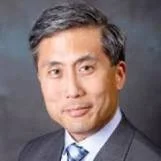
Assemblymember, David Chiu, Chair of the California API Legislative Caucus
“For decades, AsianWeek chronicled the stories, struggles, challenges, and triumphs of our diverse AAPI communities when no one else was doing so. Thanks to the Fang family and the AsianWeek team, the publication was critical at strengthening ties within our AAPI communities and between our communities and the broader public. Thanks to the new AsianWeek Database Project, this history will live on as we move into the future.”
FB.com/DavidChiu.SF Twitter: @DavidChiu
Daphne Kwok, VP of Multicultural Markets & Engagement, AAPI Market, AARP
“As a District of Columbia AsianWeek subscriber who hungered for AAPI news, I eagerly awaited my copy! I was always jealous to read about the treasure of AAPI events, activities, organizations, and actions of AAPI elected and appointed officials in the Bay Area and California. But I was also so grateful to AsianWeek for covering national AAPI work when I was Executive Director of OCA and the Asian Pacific American Institute for Congressional Studies. These last few years I have been able to partner AARP with AsianWeek producing special editions bringing great joy to people as their eyes light up asking, “Is AsianWeek back?” Thank you for your service and commitment to documenting AAPI history.”
Twitter: @DaphneKwok522
Carolyn C. Gan, AsianWeek Founding Columnist, Bay Area Merry-Go-Round
“Meeting with John Fang, HK Wong, Lim P Lee, and Charles Leong, I was one of the founding reporters of AsianWeek back in 1978. We met regularly in the coffee shops of San Francisco Chinatown for a year and a half before the first edition rolled off the press. Our paper was groundbreaking as an English-language publication, celebrating the diversity of the Asian American community.
As a U.C. Berkeley graduate and a scholar of U.S. History preparing to be a teacher and later a reporter, I was appalled that the Chinese were not documented in history books nor fully recognized for their contributions in building America. It was my goal and passion to shine the light on the accomplishments in our community: our leaders and our achievements in the arts, business, education, and public service.
AsianWeek changed the perception of Asian Americans, previously relegated to stereotypes of low-wage workers living in ghettos, stories of criminals by the mainstream media, but by covering stories of thriving everyday Asian Americans living middle-class lives in cities and suburbs. AsianWeek’s success was evidenced by the tremendous support of subscribers from Hawaii to New York, readership of all races and ages, eager to read human interest stories on the real Asians in America finally documented as never before.”
Stephen Gong, Executive Director, Center for Asian American Media
“The AsianWeek Database Project is very important as it provides an unparalleled record of key events within and of interest to the Asian American community.”